Complete Metal Building Projects Start to Finish
Metal Buildings in San Marcos for projects requiring site prep, concrete foundation, and installation under one contractor
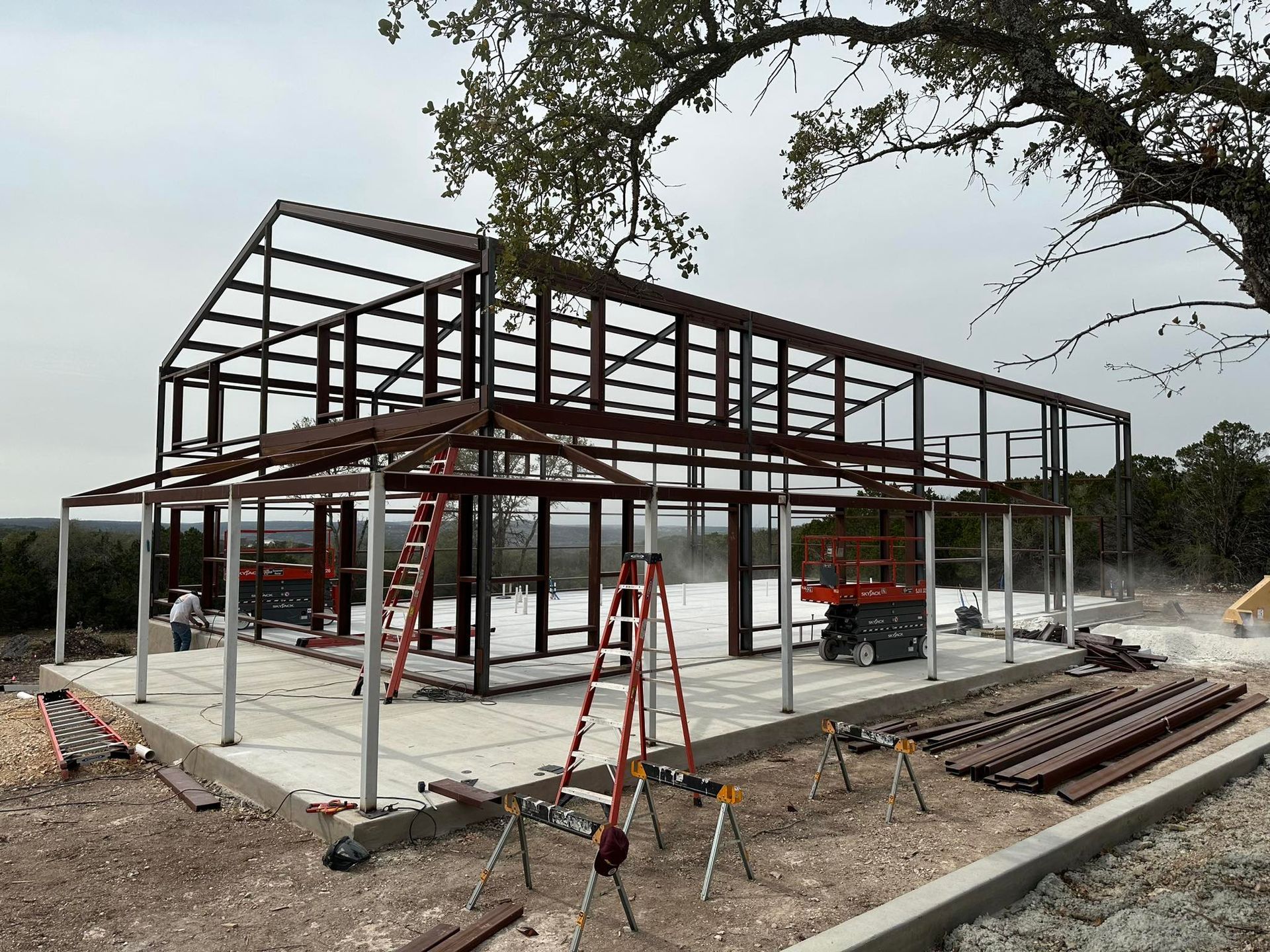
Anderson Contracting handles metal building projects in San Marcos from the first dirt moved to the final anchor bolt torqued. You work with one contractor who manages excavation, concrete slabs, material delivery, and building installation rather than coordinating multiple crews across weeks of scheduling conflicts and finger-pointing when timelines slip.
This approach means your site gets cleared, graded, and compacted by the same crew pouring your foundation and setting your building. The excavation team knows the exact pad elevation and drainage slope the concrete crew needs, and the concrete finishers know the anchor bolt layout the erectors will use. Material trucking runs on the same schedule as the work crews, so steel components arrive the day they go up instead of sitting in mud or disappearing from an unsecured site. Hays County permitting requires wind-rated designs to 120 miles per hour, and Anderson pulls permits, coordinates inspections, and ensures your foundation and anchor system meet that standard before the first panel goes up.
Reach out to discuss your building size, site conditions, and project timeline so we can walk the property and provide a complete scope.
What Site-to-Finish Coordination Actually Looks Like
Your project starts with a site visit where Anderson's crew evaluates existing grade, drainage patterns, soil composition, and access for equipment and material trucks. You get a written scope covering clearing limits, cut-and-fill volumes, base material type and depth, concrete mix design, slab thickness, rebar spacing, and anchor bolt schedules. The estimate also includes the building package itself with panel gauge, insulation values, door and window rough-ins, and any pier footings or grade beams required for your soil type and building load.
Once the site is cleared and rough-graded, you will see a level pad with compacted base rock free of organic material, properly sloped for drainage away from the slab. The concrete pour follows within days, and you will notice anchor bolts positioned in straight lines at exact spacing, embedded to the depth your engineered drawings specify. After the slab cures, the building goes up in sections, with each panel plumbed, squared, and fastened to those anchors before the next section starts.
Anderson's material trucks deliver aggregate base, rebar, concrete, and metal panels on the schedule the work demands. The same crew running the excavator also operates the concrete pump truck and assists the erection team, so there is no gap in accountability when a question comes up about pad elevation, bolt placement, or panel alignment. If Hays County requires a footing inspection before concrete or a framing inspection before insulation, Anderson schedules it and adjusts the sequence so inspectors see clean work at the right stage.
Questions About Metal Building Projects in San Marcos
These questions address the most common concerns about scheduling, permitting, site conditions, and costs when you are planning a metal building project handled by one contractor from excavation through final installation.
Anderson Contracting coordinates every phase of your metal building project in San Marcos, from the first load of base rock to the final inspection sign-off. Contact us with your building dimensions, intended use, and site address so we can walk the property and provide a detailed estimate covering sitework, concrete, and installation under one scope.