Solid Surfaces That Support Daily Use
Professional concrete installation in San Marcos for foundations, driveways, patios, and sidewalks.
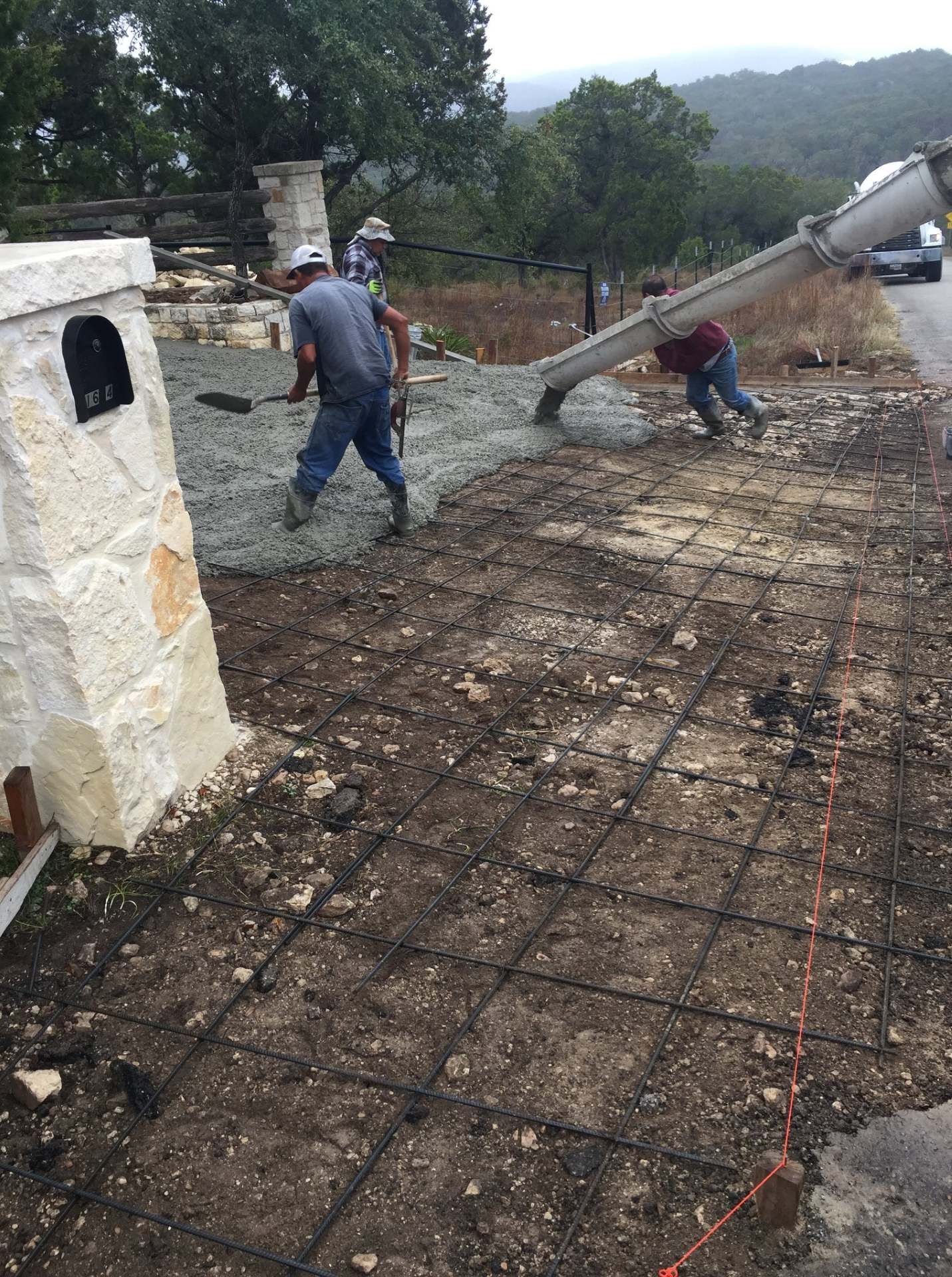
When your driveway cracks from settling soil or your patio surface becomes uneven and collects water, new concrete restores the flat, stable surface you need for vehicles, foot traffic, and outdoor furniture. In San Marcos, where clay soil can shift with moisture changes, properly poured concrete with correct base preparation prevents the sinking and cracking that shortens the life of flatwork. Anderson Contracting handles forming, pouring, and finishing to create driveways, patios, sidewalks, and foundations that drain correctly and hold up under load.
Concrete work starts with excavation and base material that compacts evenly to support the slab above it. Forms are set to the correct height and slope for drainage, then concrete is poured, leveled, and finished with a trowel or broom texture depending on the surface. Residential projects include driveways wide enough for trucks, patios sized for seating areas, and walkways that connect entry points without trip hazards. Commercial flatwork follows the same process but often includes thicker slabs and reinforcement for heavier loads. Consultations help determine the right thickness, reinforcement, and finish for your project scope and timeline.
If you need a new driveway, patio, or foundation poured in San Marcos, contact Anderson Contracting to schedule a site visit and review your layout and grading requirements.
How Base Prep and Finishing Affect Long-Term Performance
Your concrete project in San Marcos begins with excavation to remove unstable soil, followed by placement of crushed stone or gravel that is compacted in layers to create a firm, level base. Forms are built around the perimeter to contain the pour, and rebar or wire mesh is added for reinforcement if the slab will support vehicles or heavy equipment. Concrete is mixed to the correct ratio, poured into the forms, and worked with floats and trowels to achieve a smooth or textured finish.
After the concrete cures, you will notice that water runs off the surface toward drainage areas instead of pooling in low spots. The slab remains level under vehicle weight, and the finished surface resists cracking as long as the base was compacted properly. You can park trucks, set up furniture, or walk across the surface without worrying about uneven sections or soft spots that develop when base prep is skipped.
Concrete does not replace existing slabs that are structurally sound, but it works well when old surfaces have cracked beyond repair or when you are adding new space that requires a durable foundation. The material performs best when poured during moderate temperatures, as extreme heat or cold can affect curing times. Expansion joints are cut into larger slabs to control cracking as the concrete settles.
You Probably Have the Same Questions Others Do
Homeowners in San Marcos often ask about thickness, curing time, and how to prevent cracking, so we have addressed the most common concerns below.
Anderson Contracting pours concrete for San Marcos properties where homeowners and business owners need flatwork that drains correctly and supports daily use without ongoing repairs. Learn more about your project by reaching out to discuss site conditions, dimensions, and the best finish for your application.