
Access Routes Built for Load and Weather
Private road construction in San Marcos for residential properties, commercial sites, and rural access.
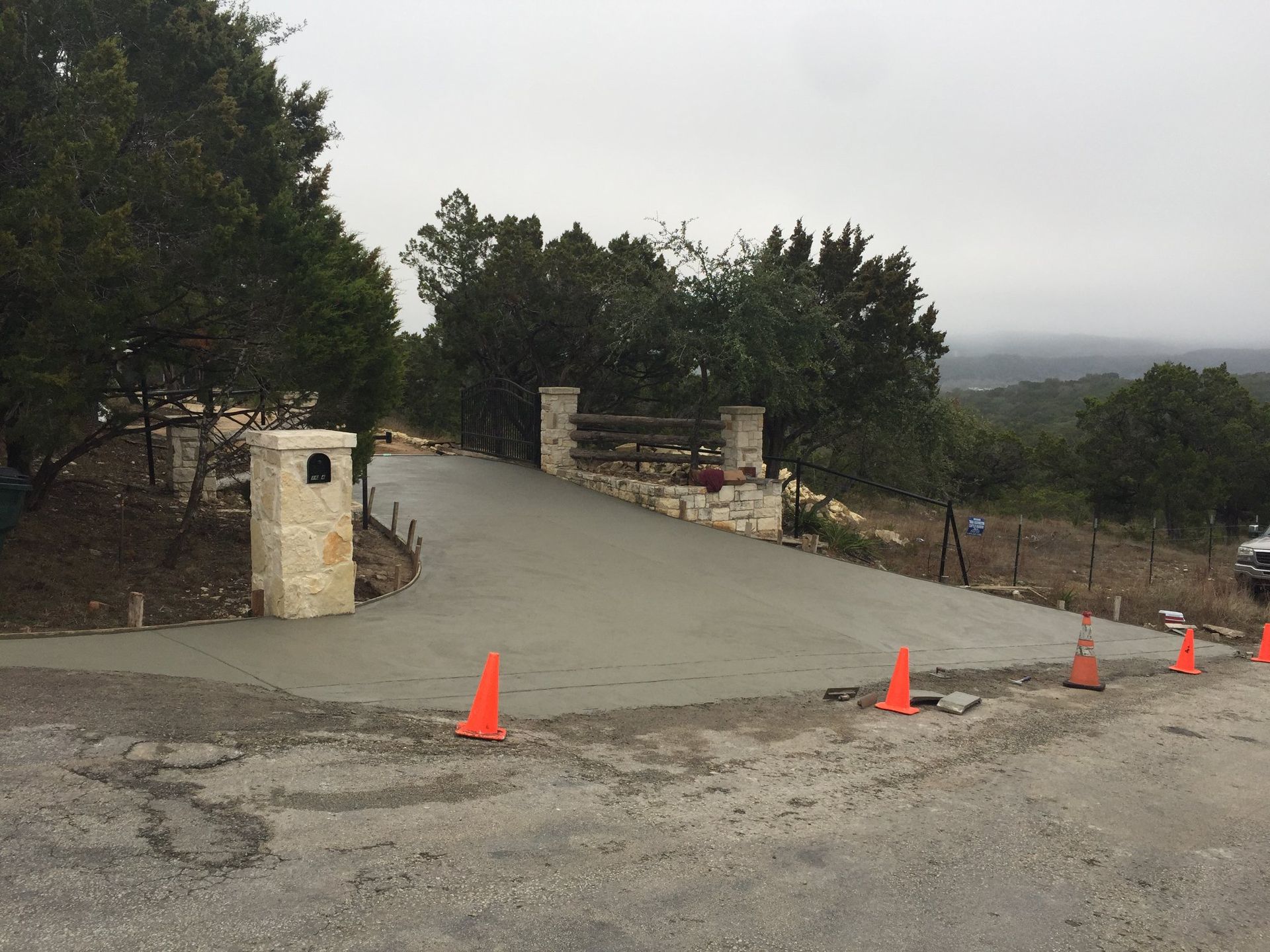
When your property in San Marcos lacks reliable access for delivery trucks, emergency vehicles, or daily commutes, a private road provides the durable surface you need to reach buildings, pastures, or work areas without getting stuck in mud or damaging vehicles on rough ground. You need a roadbed that drains properly, supports heavy loads, and holds up through rainy seasons without washing out or developing ruts. Anderson Contracting builds private roads, access lanes, and drive approaches with proper grading, base preparation, and surface materials that match how the road will be used.
Road construction starts with clearing and grading to establish the correct slope and alignment, followed by base material that is spread and compacted to create a stable foundation for the surface layer. Gravel, caliche, or asphalt is used depending on traffic volume, vehicle type, and budget, and the road is crowned or sloped to shed water toward ditches or culverts that prevent erosion. Residential roads are built to handle passenger vehicles and occasional heavy deliveries, while commercial access roads are designed for daily truck traffic and heavier loads. Free consultations assess your layout, usage needs, and drainage challenges so the road can be designed to last without constant maintenance or rework.
If you need a new access road or driveway built on your San Marcos property, contact Anderson Contracting to schedule a site consultation and review the best alignment and surface type for your land.
How Base Depth and Drainage Control Road Lifespan
Your road project in San Marcos begins with clearing the route and rough grading to remove high spots and fill low areas, followed by placement of a compacted base layer that supports the surface material. Base depth varies from six inches for light-use driveways to twelve inches or more for roads that carry heavy equipment, and each layer is compacted with a roller or plate compactor to prevent settling. The surface layer is spread evenly and crowned so water runs off to the sides, and culverts or drainage ditches are installed where water crosses the road or collects in swales.
After construction, you will notice that the road stays firm under vehicle weight even after heavy rain, and that water flows off the surface instead of pooling in the middle or eroding the edges. The roadbed does not develop ruts or soft spots where trucks pass repeatedly, and the surface material stays in place without migrating to the sides or washing out during storms. You can drive loaded trailers or delivery trucks without worrying about getting stuck or damaging axles on uneven ground.
Private road construction works best for rural properties, large residential lots, or commercial sites where public road access does not reach the building or work area. The service includes grading, base installation, and surface placement, but it does not typically include ongoing maintenance or seal coating unless arranged separately. Roads built with proper drainage and base compaction require less frequent repair and handle freeze-thaw cycles better than roads built on unprepared soil.
People Usually Want to Know This Upfront
Property owners in San Marcos often ask about surface options, drainage design, and how long a private road lasts, so we have answered the most common concerns below.
Anderson Contracting builds access roads and driveways across San Marcos properties where landowners need reliable routes that support vehicles year-round without constant grading or washout repairs. Get in touch to walk your property and discuss the alignment, drainage, and surface type that fit your usage and budget.